 Professionals Press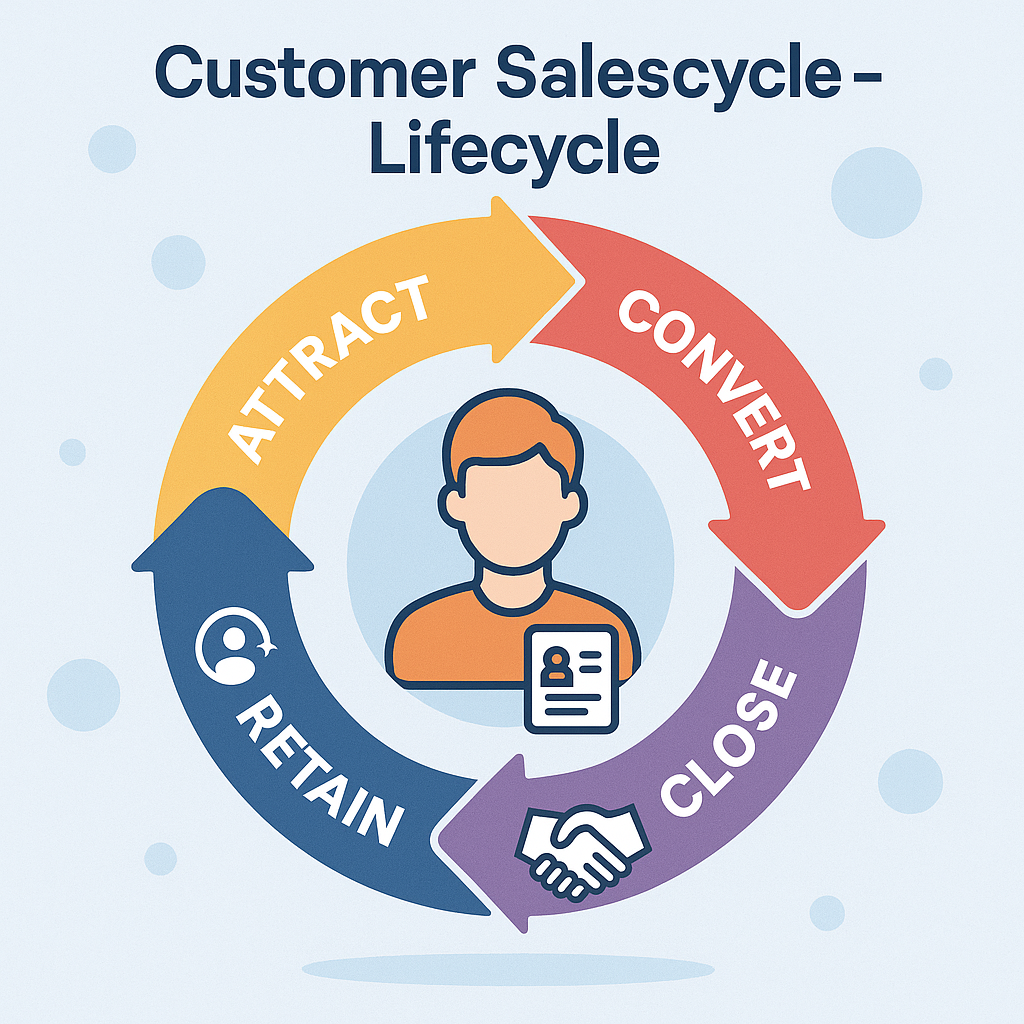
Customer Salescycle – Lifecycle
Customer Sales / Lifecycle
Exploration
Exploration is the earliest stage, where potential clients become aware of a need, problem, or opportunity. They are not yet searching for a specific provider but are open to ideas, insights, and general guidance. At this point, visibility matters more than persuasion—your goal is to appear where attention naturally flows.
Content that educates, frames problems clearly, or introduces new perspectives performs best here. Thought leadership, broad-topic articles, and high-level insights help establish initial awareness and position your brand as relevant before the buyer even begins an active search.
Discovery
In the discovery phase, prospects begin actively seeking solutions. They are identifying possible approaches, categories of service, and potential providers. This is where being findable across search, directories, and platforms becomes critical.
Clear positioning, consistent business information, and presence across trusted platforms increase the likelihood of being surfaced. At this stage, prospects are forming their initial shortlist—if you are not visible, you are not considered.
Research
Research is where evaluation begins. Prospects compare providers, review credentials, assess expertise, and validate credibility. They look for proof—case studies, reviews, recognitions, and demonstrated experience.
Trust signals play a central role here. Consistent messaging, strong third-party validation, and detailed information help reduce uncertainty. Buyers are narrowing options and looking for reasons to move forward—or eliminate you.
Engagement
Engagement marks the transition from passive evaluation to active interaction. Prospects may reach out, request information, attend consultations, or engage with your content more directly. This is where responsiveness and clarity matter most.
The quality of communication, speed of response, and ability to understand client needs can significantly influence outcomes. This stage is less about visibility and more about experience—how easy and confident it feels to move forward with you.
Commitment
Commitment is the decision point where a prospect becomes a client. They have selected a provider and are ready to proceed. At this stage, clarity in pricing, process, and expectations helps remove any final friction.
A smooth onboarding experience reinforces the decision and sets the tone for the relationship. Confidence built during earlier stages must now be validated through professionalism and delivery.
Retention
Retention focuses on maintaining the relationship after the initial engagement. Consistent delivery, communication, and value creation are key to keeping clients satisfied and engaged over time.
Strong retention reduces the need for constant new acquisition and increases lifetime value. Ongoing touchpoints, follow-ups, and proactive service help ensure clients continue to see your value.
Ratings & Referrals
The final stage extends beyond the individual client to influence future prospects. Satisfied clients leave reviews, provide testimonials, and refer others, contributing to your broader reputation and discoverability.
These signals play a critical role in earlier stages of the lifecycle for new buyers. Encouraging and facilitating feedback turns successful engagements into long-term growth drivers, reinforcing credibility and visibility across the market.
 Professionals Press is a SpicyPress project. If it's SpicyPress you know it's got to be good.